2024-02-19

Photos from my fine new camera and my fine old camera
2024-02-19

20 minute exposure of the nebulae in Orion. Probably the first time I’ve bothered with it – actually quite pretty.
Using the Vespera “Plan My Night” I captured 6 Messier objects last night. Mostly clusters which never impress but i was disappointed in M1 – the Crab Nebula; even after an hour it’s just a smudge. I’ll have to give it more time. It’s unbelievably easy to do though.


This was unbelievably painless. I set out the vespera, made sure it was level, woke it up, initialized it and told it to Image M100.

My Vespera smart telescope arrived yesterday 14 months after I ordered it. It’s all assembled so the only thing i had to do was charge it and update the software. I took it out last night for a spin – just put it on the patio, levelled it, and let it initialize. It took two tries and probably 10 minutes to figure itself out.

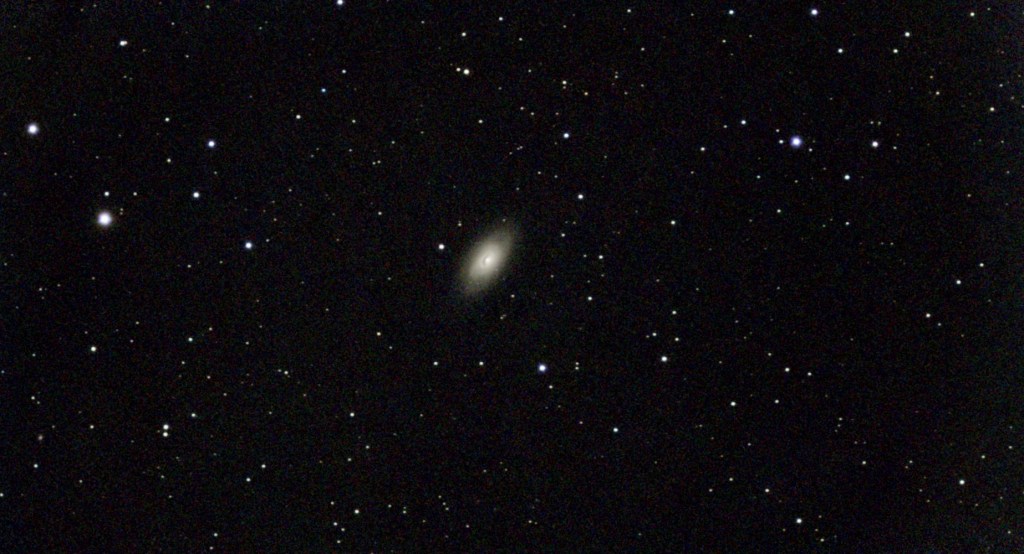
I took two shots – M51 and M64. M51 because it was well positioned and M64 because i had not captured it before.
The M51 shot is pretty spectacular to me – especially compared to earlier efforts. It took 180 10 second shots for a total of 30 minutes and stacked them in the telescope.

My best previous effort was grainy because it’s only 8 shots. 75 second exposures at ISO 800 through the William Optics z61 so 360mm, f/5.

M64 wasn’t as well positioned and is not as spectacular as the whirlpool in any event. I only let it run for 20 minutes just to bag the Messier number.
Except for the galaxy M74 these are all clusters. Except for M56 they are all a dozen or so 80 second ISO 800 shots with the canon t3i through the william optics z61(360mm, f/5). M56 was accidentally done at 10 sec ISO 6400. I’m not sure it suffered all that much for the skimping.
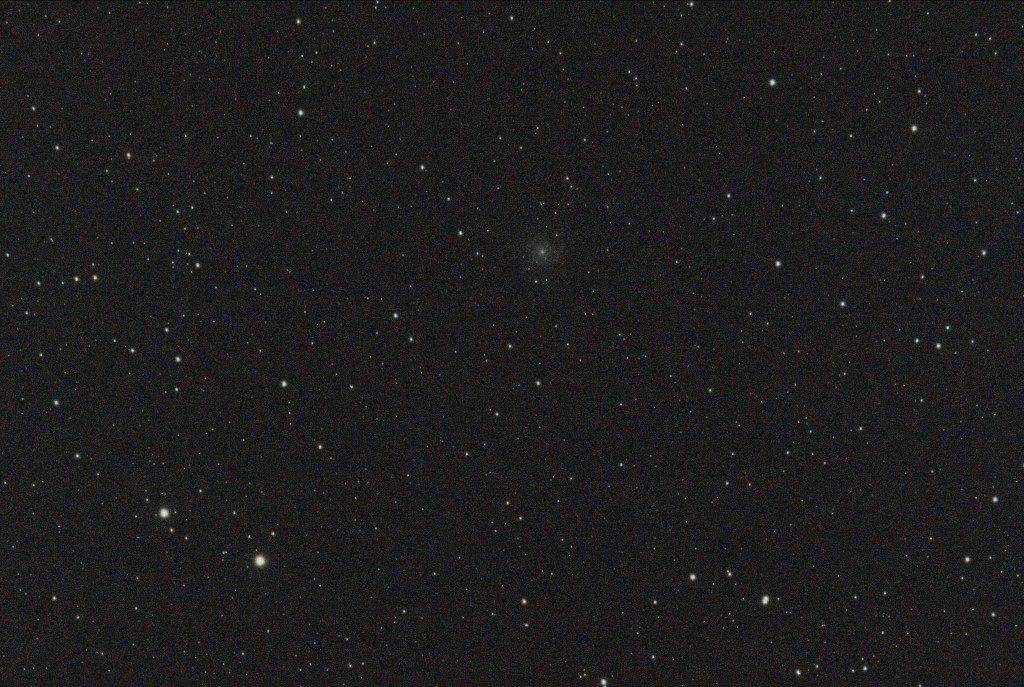
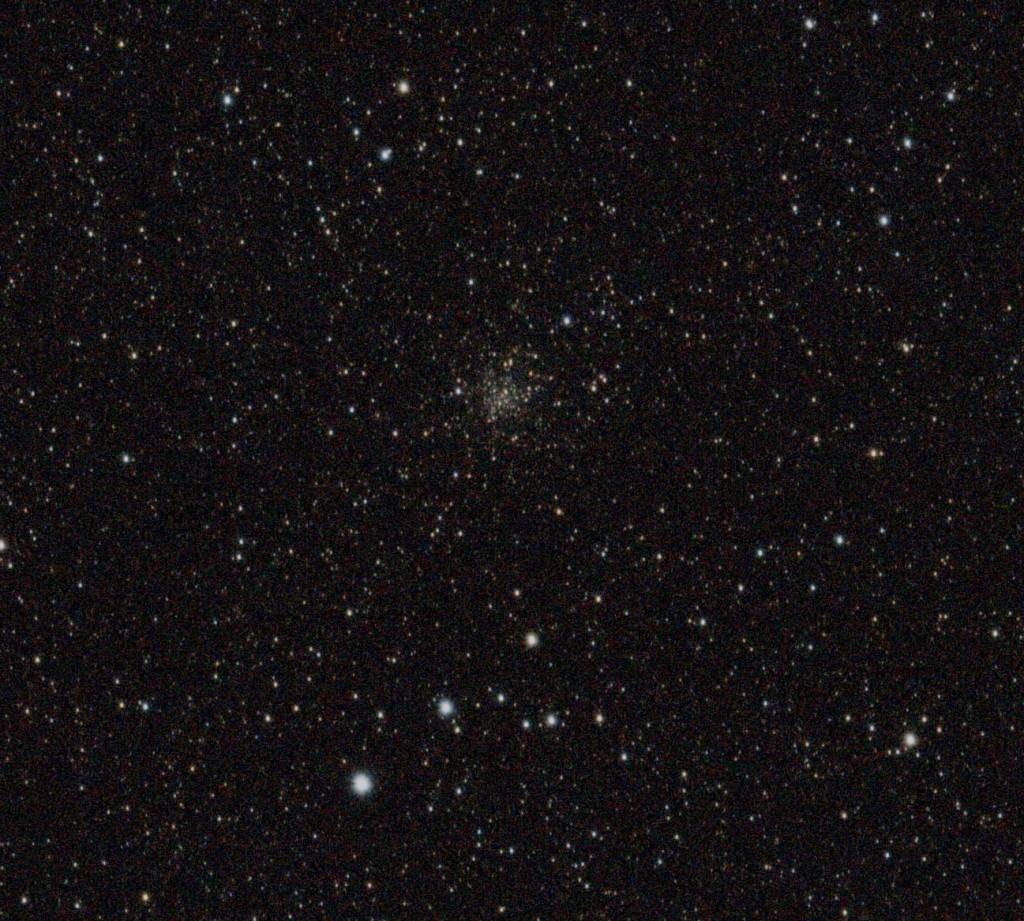
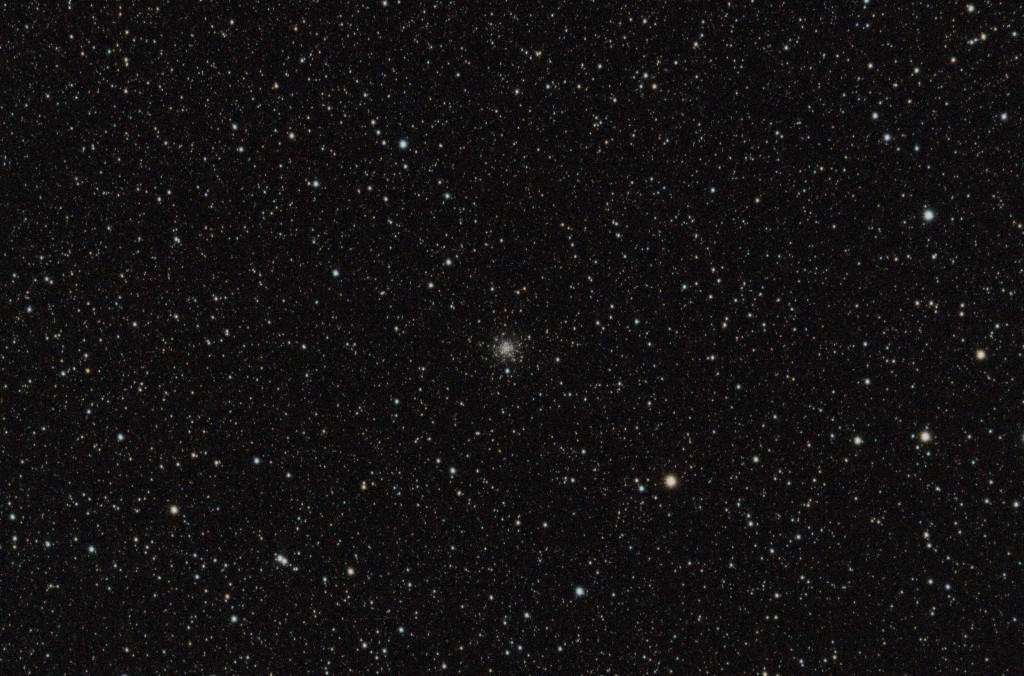

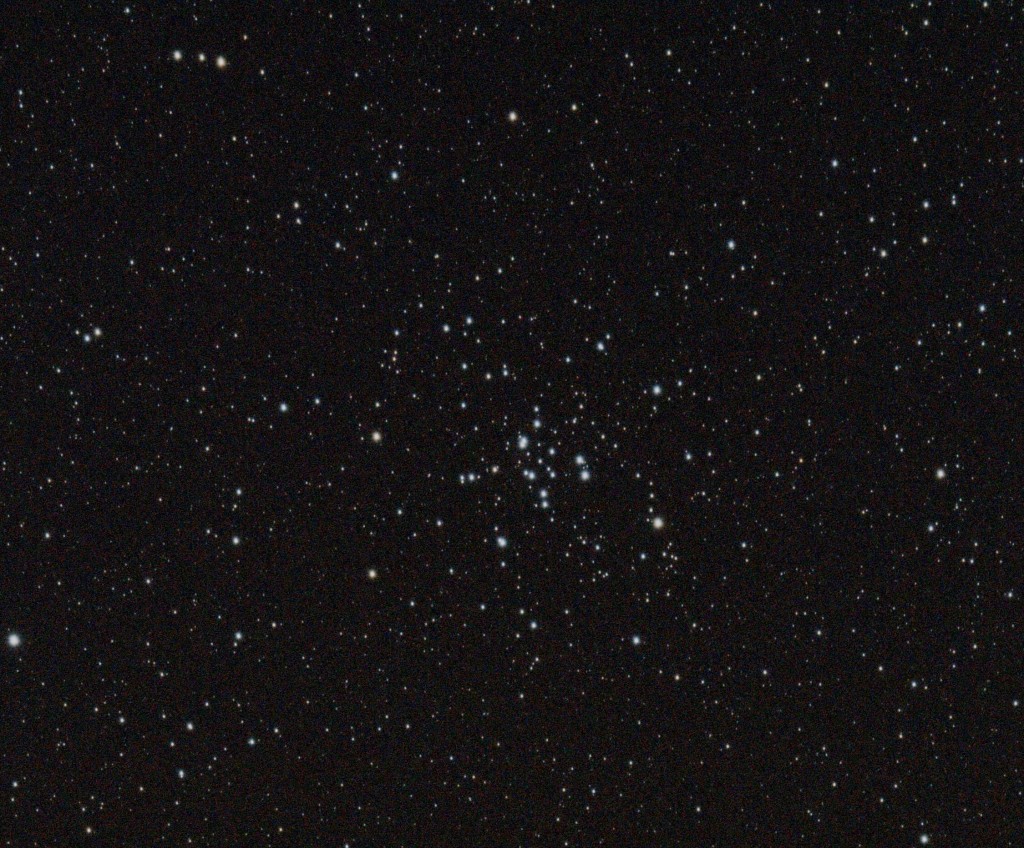
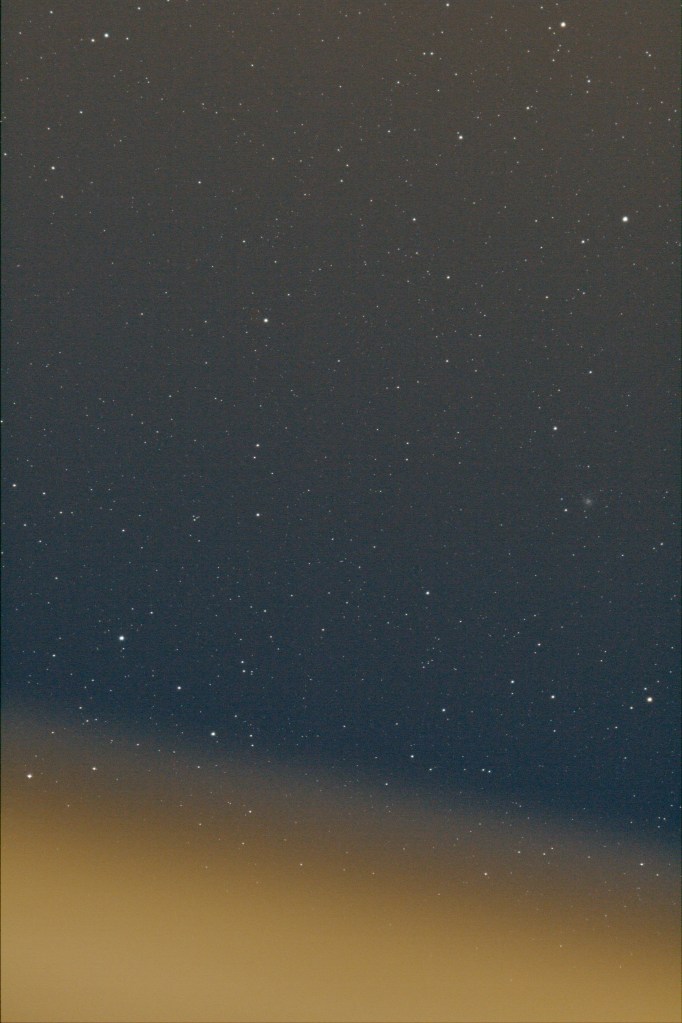
These are crappy, pro-forma, messier sweep images but I like them. I was shooting for M73 which was too close to my roof and getting closer so i grabbed a dozen shots 10 seconds at iso 6400. The one above with the roofile out of focus at the bottom has a nice sky colour. It’s cropped below to show M73 – an asterism of four stars near the left – and M72, a larger globular cluster on the right.

In one evening I targeted 8 Messier objects from my back yard. The evening before i had done several others. These are all quick and dirty captures – mostly 12X80 seconds at ISO 800 through the William Optics Z61 – 360mm f/5. Most of the targets are either global or open clusters which i don’t find that interesting. The exceptions are the galaxy m74 and the “little dumbbell” nebula m76 both of which could have stood more time. There’s a more cropped version of m76 along with it.


M40 is a double star in Ursa Major – easy to find but not that interesting. Not clear why it got included in Messier’s catalog. The green circle outlines HD238107 and Hd238108 both around magnitude 10. Toward the bottom left is Megrez(mag 3) in Ursa Major where the handle of the big dipper meets the bowl. Between there and M40 is UMa 70(mag 6). Off to the top left is the track of starlink-2657.

This is a quick and dirty capture – 8 images at 90 seconds 800 ISO through the william optics z61(360mm f/6). Processed in Siril with colour calibration, auto histogram, and asinh.
 Astrophotography Newbie