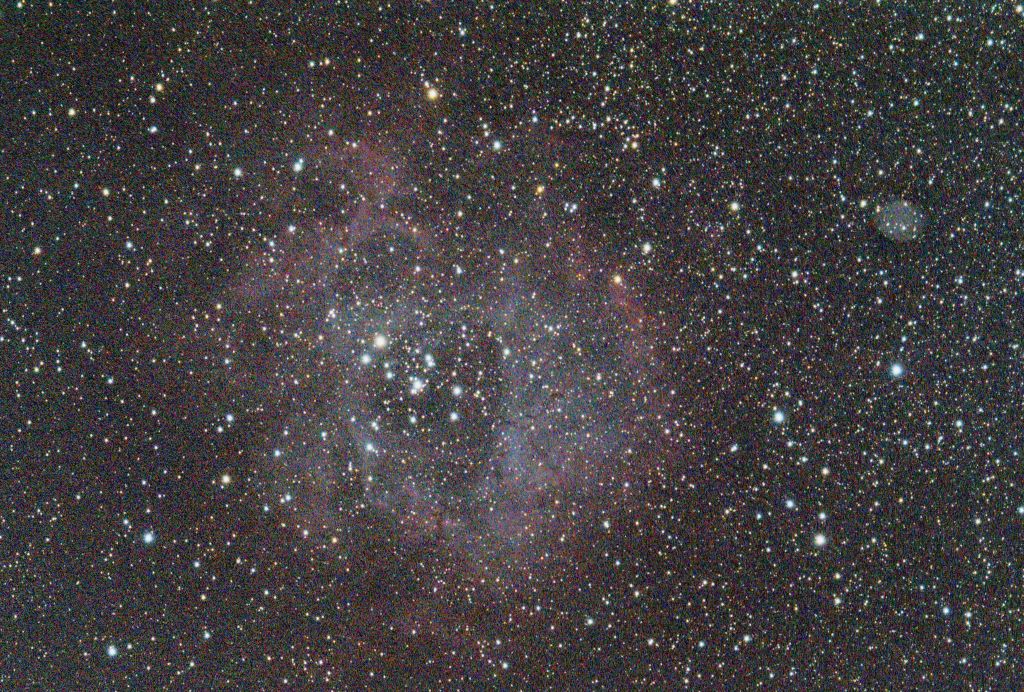
The Rosette Nebula

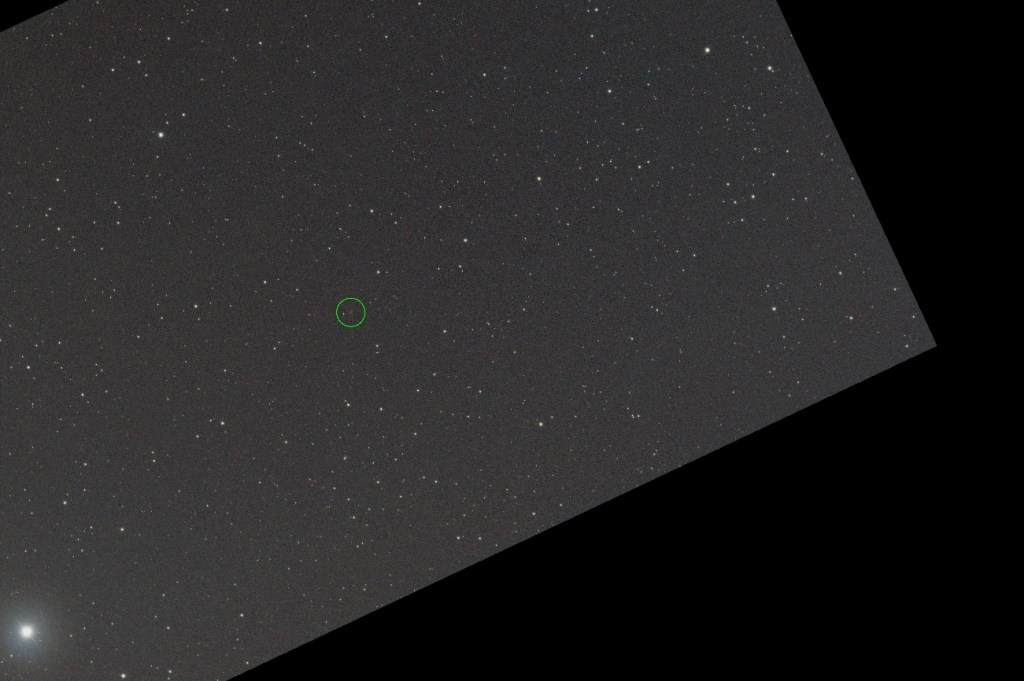
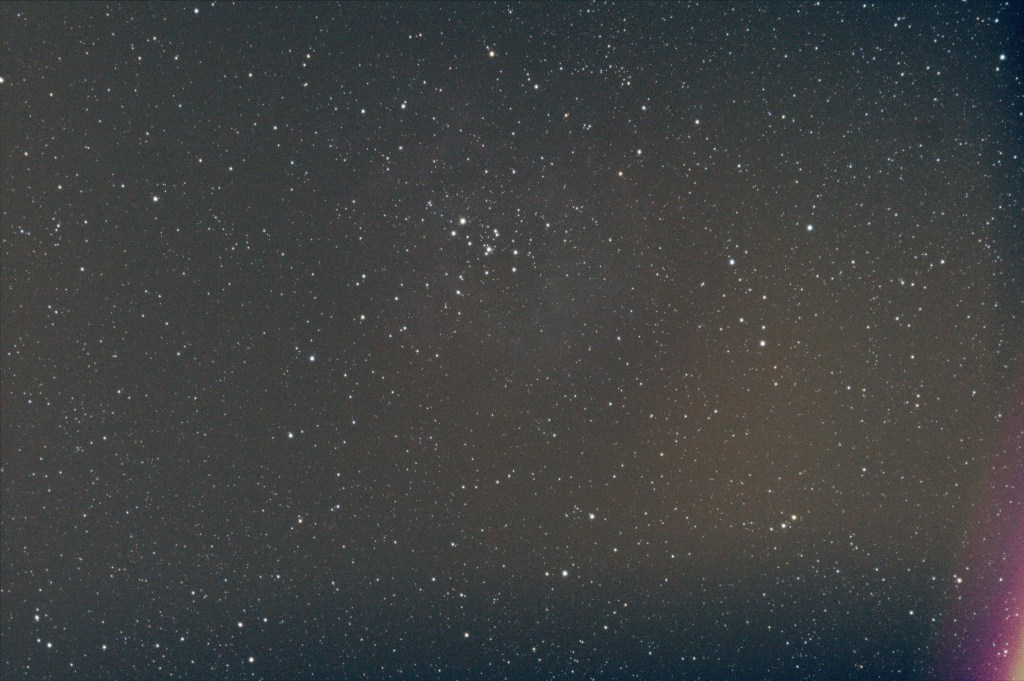
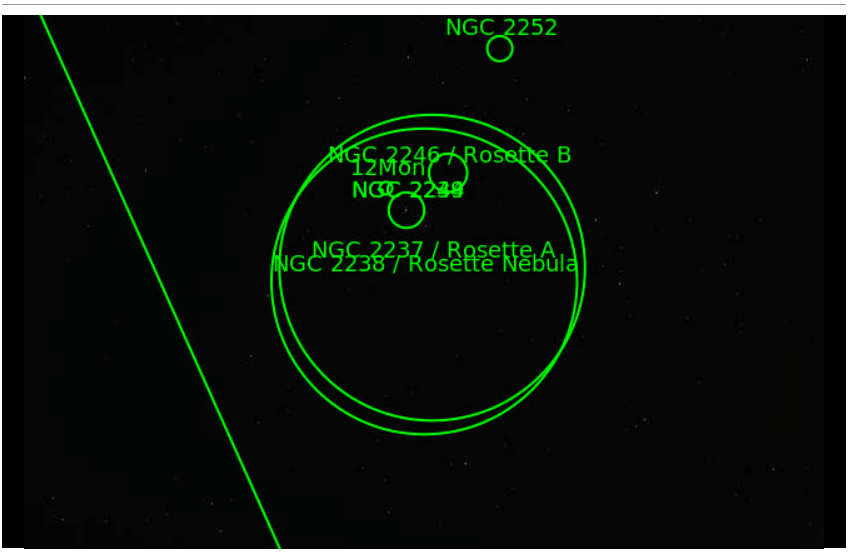
This has been my great white whale for the last couple of months. It’s in the south in the winter which makes it tricky from my back yard. Last night I went to a nearby park where I have a view to the south over farmland. With the snow gone I was able to get 30 100 second subs at 800 ISO through the william optics z61(360mm f/6). I had to stand for the better part of an hour blocking a streetlight but it seemed worth it. There was a pretty strong gradient in the subs but I found a new siril script that seems to do a good job knocking down gradients. Probably a few weeks ago at the last new moon would have been better but i’ll take this for now. The blotch at around 2 o’clock is dust that wasn’t mitigated by my flats. Besides the script I would have used siril’s auto-stretch histogram, the asinh function to raise the blackpoint and colour saturation to boost the colour.

I’ve been looking lately at all-in-one astrophotography solutions like stellina or the EVscope. It’s not that i can’t get decent results but it’s a lot of hacking around in the field and after the fact.
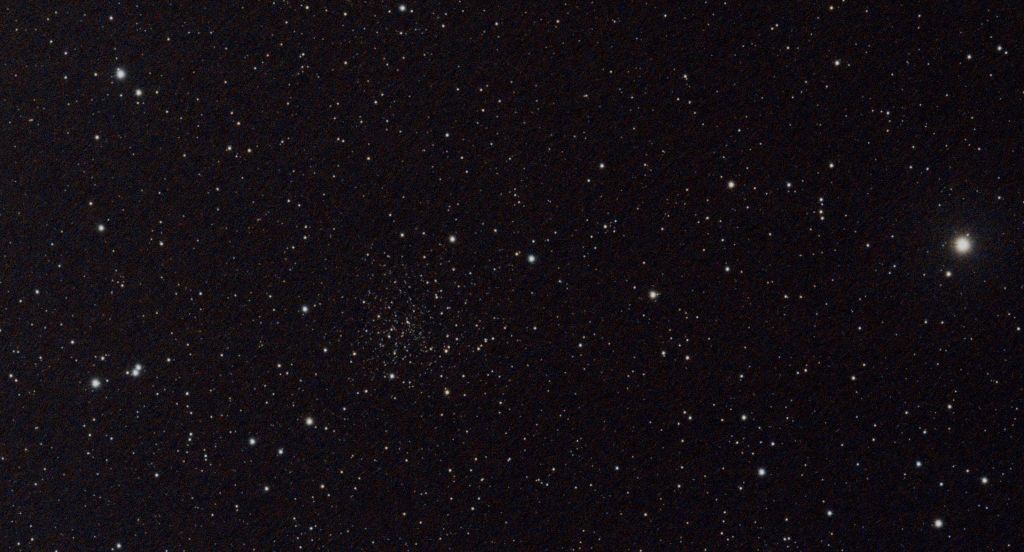
Polarissima Cluster

Another pretty name, the polarissima cluster is also just a few degrees away from polaris opposite polarissima borealis.I seriously just bagged it for the name. The bright star to the right is not polaris – it’s 2 uMi, magnitude 4.

This is 30 60 second shots at 800 iso through the william optics Z61(360mm f/6).

Polarissima Borealis

I just think that’s a wonderful name for a galaxy. Unfortunately it’s far away and dim. it’s a stunning 285 million light years away and appears as magnitude 14. Not hard to find but hard to photograph. The near star in the inset is magnitude 12 Gaia DR2 1152635154843863808 (well probably). Polarissima Borealis is NGC 3172.

This is 30 shots of 60 seconds at 800 ISO through the william optics Z61 (360mm f/5).

Grainy M51 Short Shot

This is M51 and NGC5195. It’s grainy because it’s only 8 shots. 75 second exposures at ISO 800 through the William Optics z61 so 360mm, f/5.

I’ve cropped it to be similar in size to a shot i did through the takumar lens around this time last year. The Takumar shot (below) is a single exposure because i hadn’t discovered siril yet.

Bode’s Galaxy and Friends

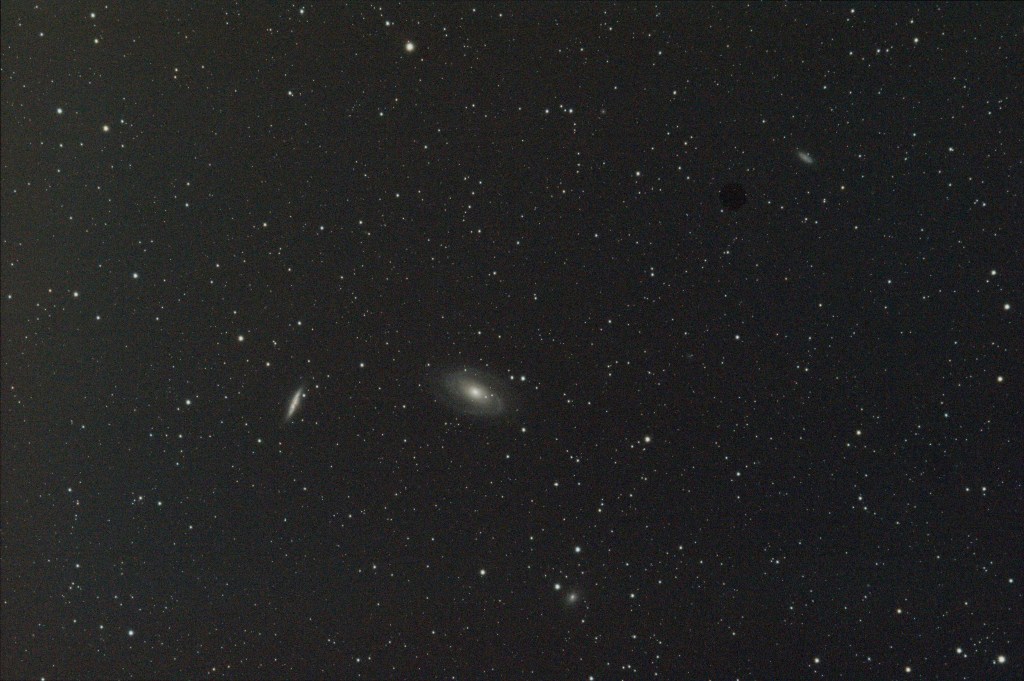
Bode’s is the spiral near the center, to the left is NGC 3034 the Cigar Galaxy. Above to the right is NGC 2976 and below near the triplet is NGC 3077.

This is 45 exposures of 75 seconds each at ISO 800 with my canon t3i and william optics Z61(360/f5). They were stacked and colour calibrated with Siril, autostretched and the black point raised with the asinh processor.

It’s dramatically better than last time i tried this but I still find the images a bit grainy.

Inverting the DTR Signal for Stellarmate

I’m trying to install Stellarmate OS on a raspberry Pi to simplify my setup and let me stay indoors on these cold canadian nights. The first thing I had to do was download the FT_PROG tool from https://www.ftdichip.com/Support/Utilities.htm, and invert the DTR RS232 signal of a chip inside the IEXOS-100 mount. This seems to be a pretty standard thing to do and doesn’t seem to interfere with POTH’s managing the mount.

Astrotortilla Plate Solving Speed

I’m using Astrotortilla to refine the pointing of the telescope after a goto. It works great but it can be slow as heck. One solve last night took 4 minutes! I made some parameter changes a while ago that improved things but it’s fiddly. One last thing to try is to tell it that my pointing can’t be off by more than so many degrees – i’ll try 15 degrees next time i’m out.

UPDATE: I noticed that the online plate solver at astrometry.net was solving using a different set of indexes 4111.fits for example as opposed to 4211 which i would have. I found and downloaded the 41xx indexes and the difference is night and day – solves are routinely done in 10 seconds! I haven’t needed to change the 180 degree figure to 15.