And How About That Takumar!

One of he objects I was excited to shoot with the Z61 was M57 the Ring Nebula. I had captured it with the Takumar 200mm f/4 lens and I thought the larger scope and longer focal length would improve it. It did, sort of, but the Takumar image is still prettier.

On the left above is the Takumar 200mm f/4 11 shots, iso 800, 25 seconds. On the right is the Z61 360mm f/6, 12 shots at iso 800 60 seconds. Both processed about the same way in siril and cropped to the same area then the Z61 image was resized 66% to compensate for the focal length. The Z61 shot clearly show more stars but the image has lots its charm. Maybe I just blew out the ring with too much exposure.

The two exposures are not that different though. The formula is something like L=f^/(iso*time) and 4^2/(25*800) is not very different from 6^2/60*800. So maybe processing.
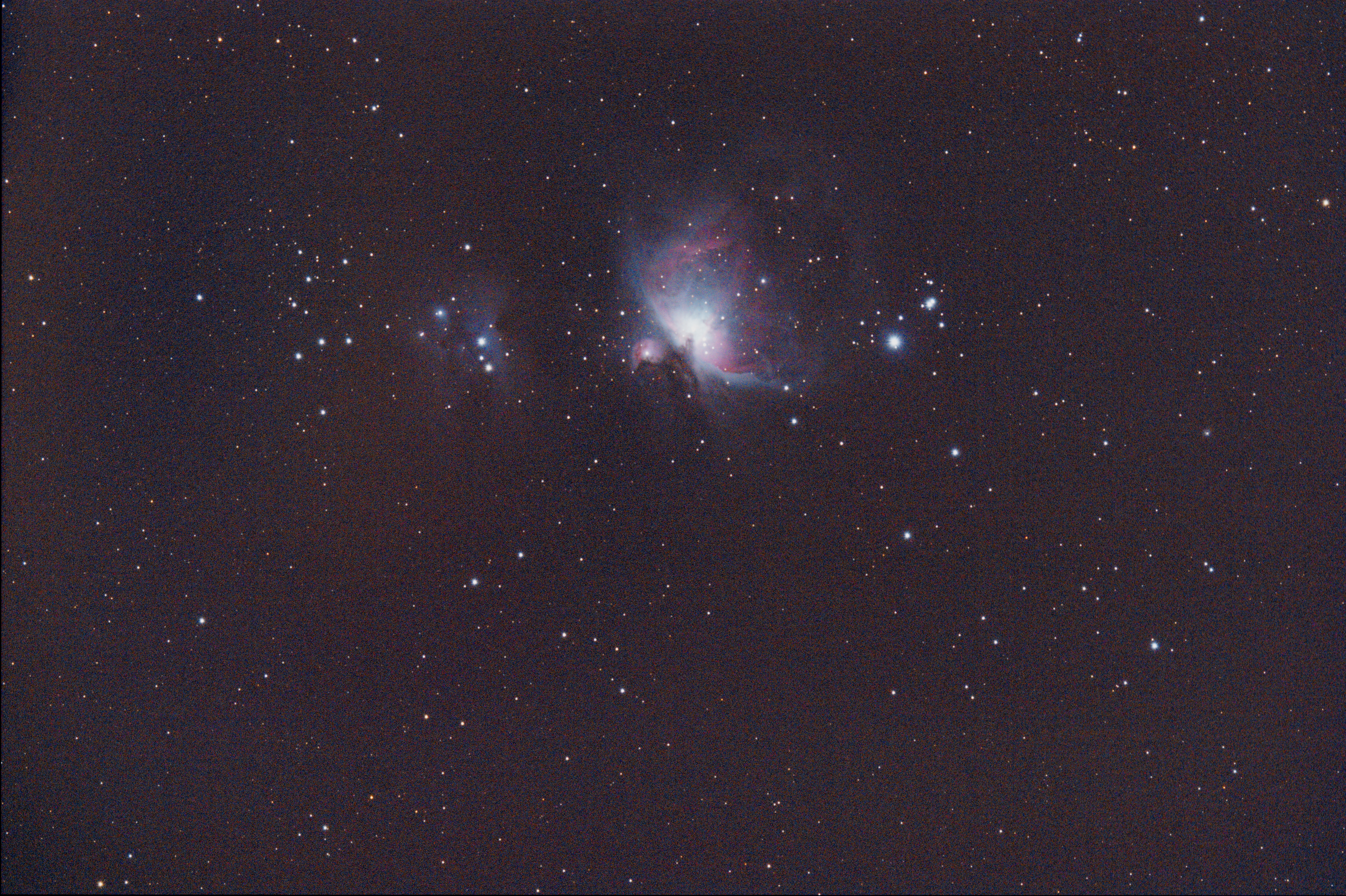
The Late M42

I’m not entranced with M42, it’s just kind of big and blah. I came across though a sequence I had taken and processed in January and decided to re-do it to see if my siril processing skills were any better. I would say not. Both images below are based on 60(!) 15 second shots at ISO 800. The second is the reprocessed one which theoretically would have better background removal and color calibration. The only thing I’d say is that i probably raised the black point more on the second one. I’m not sure why i did so many short exposures – maybe full moon or snow cover. it would have been better to lower the ISO and do fewer longer shots just to shorten processing. And I still don’t care about M42.

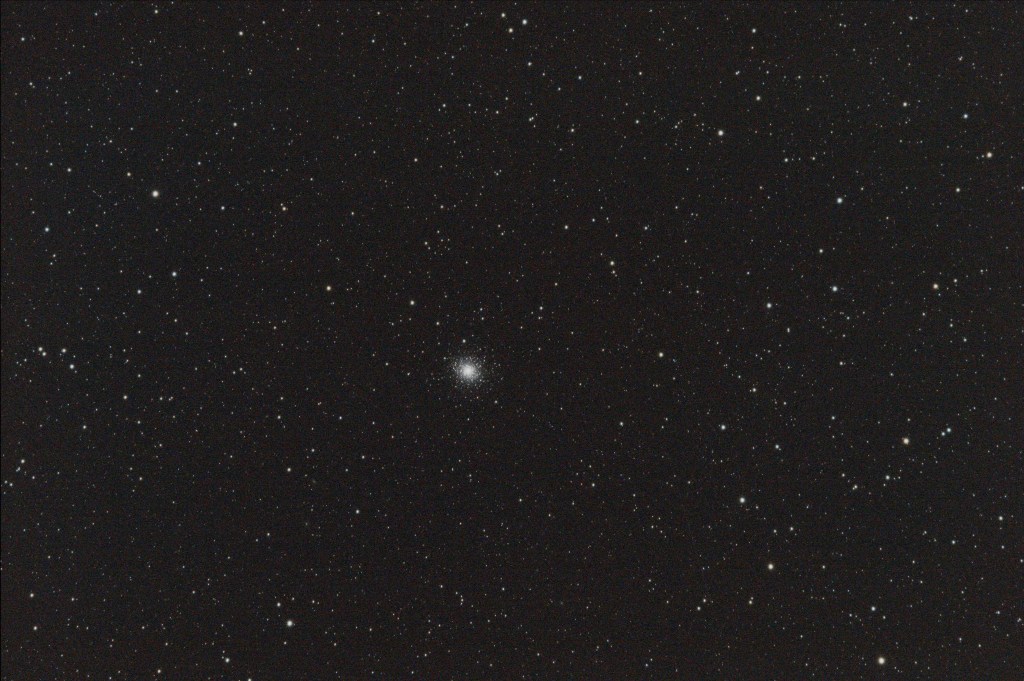
M14 and M92

M14
M92

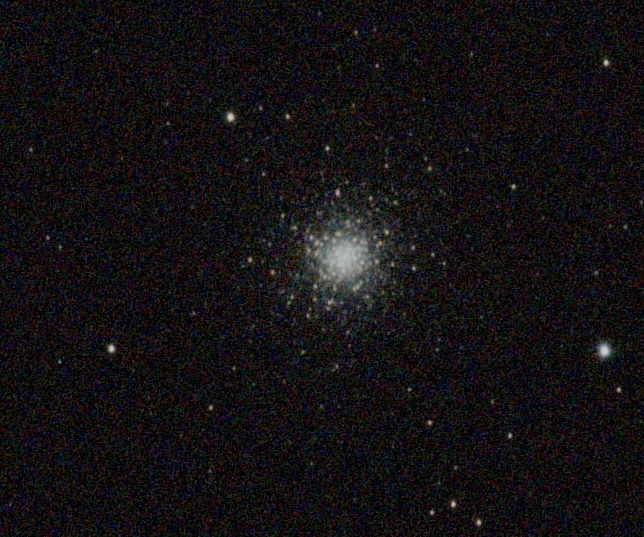
These don’t amuse me nearly as much as nebulae and galaxies but i guess i’m going to work through the messier catalog as they wheel past me. M14 and M92 are both about 30,000 light years away so part of our galaxy.

These are both low effort images – 9 or 10 exposures at 60 seconds for M92 and 90 seconds for M14 all at ISO 800 with the canon t3i on the William Optics Z61(360mm f/6).

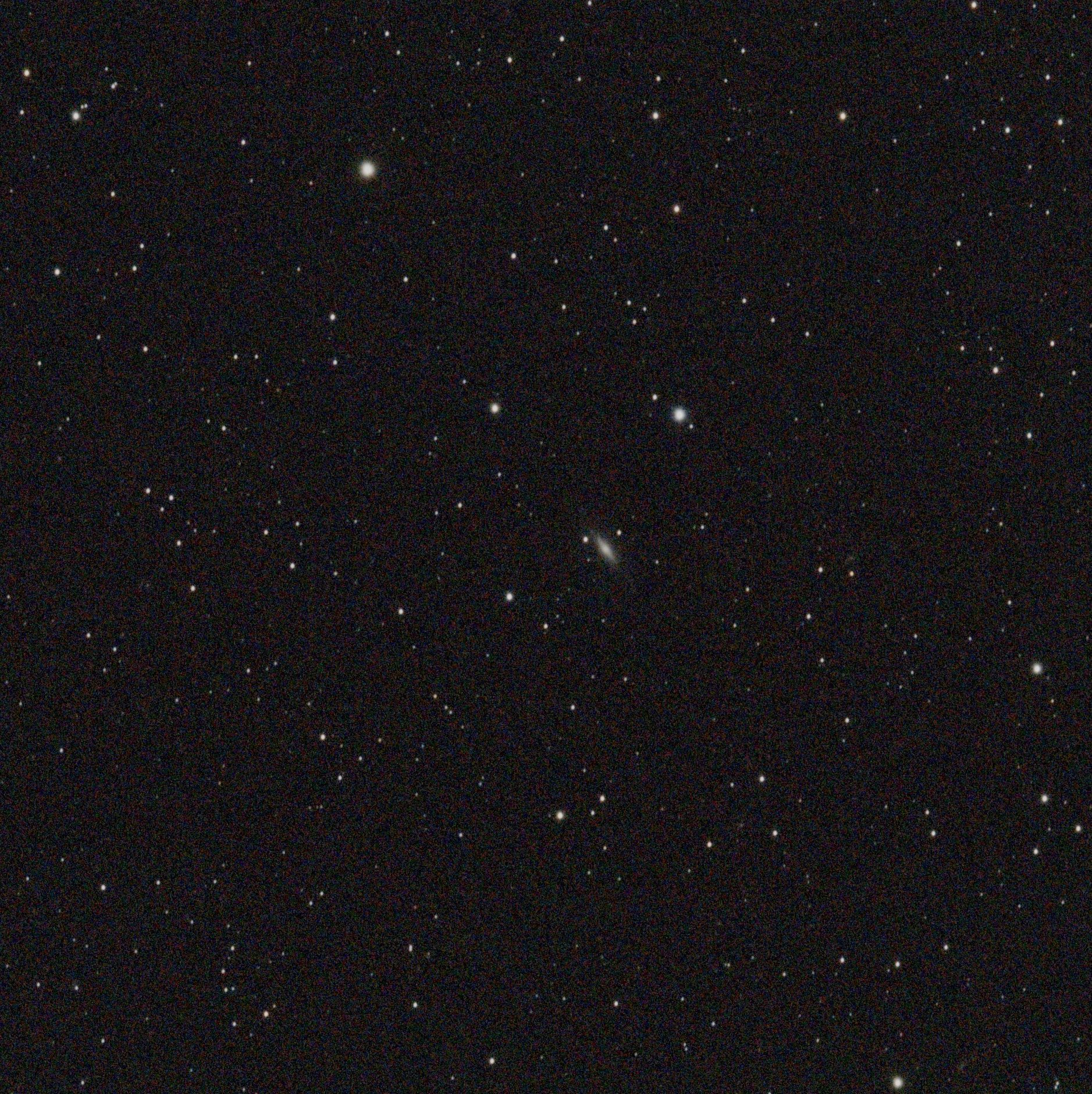
M102 is Shy But Has Distant Companions.

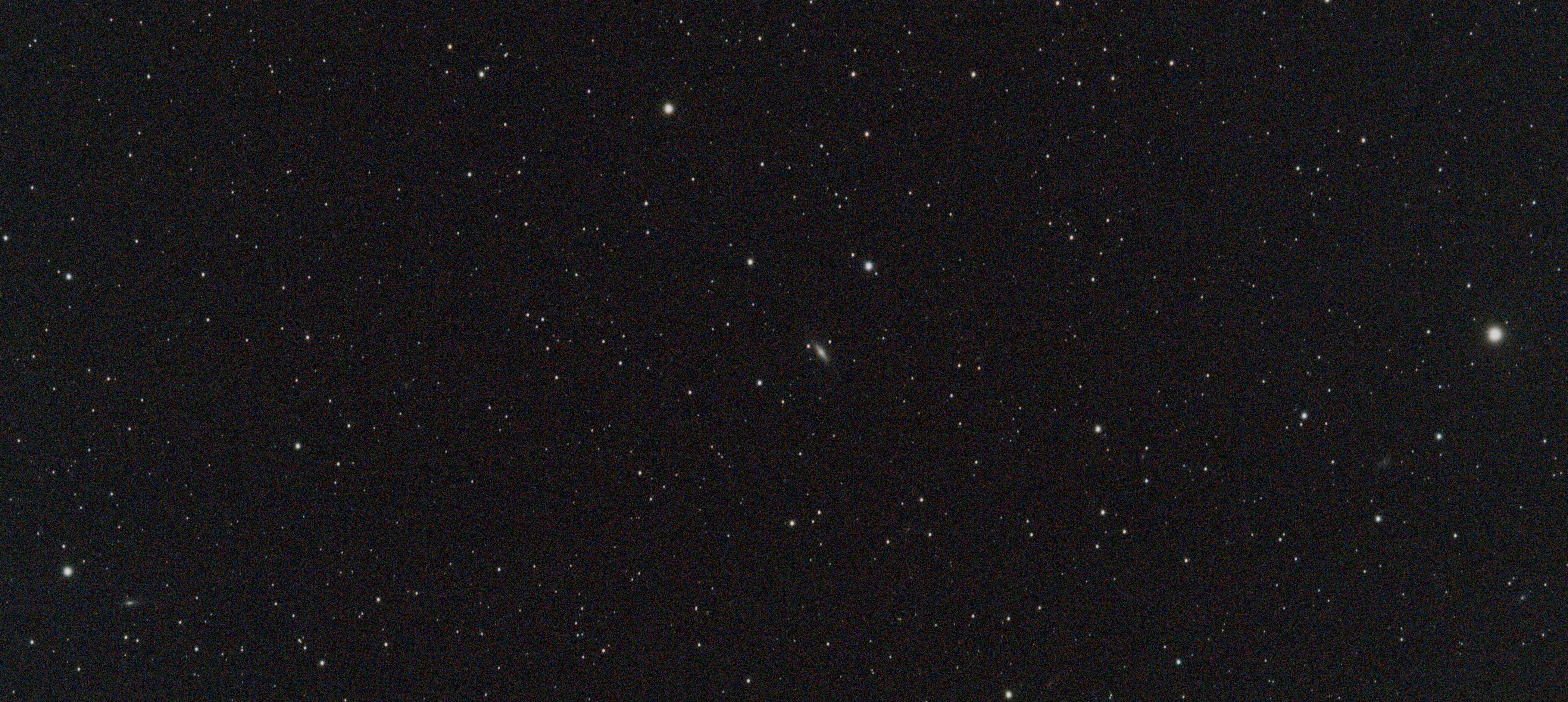
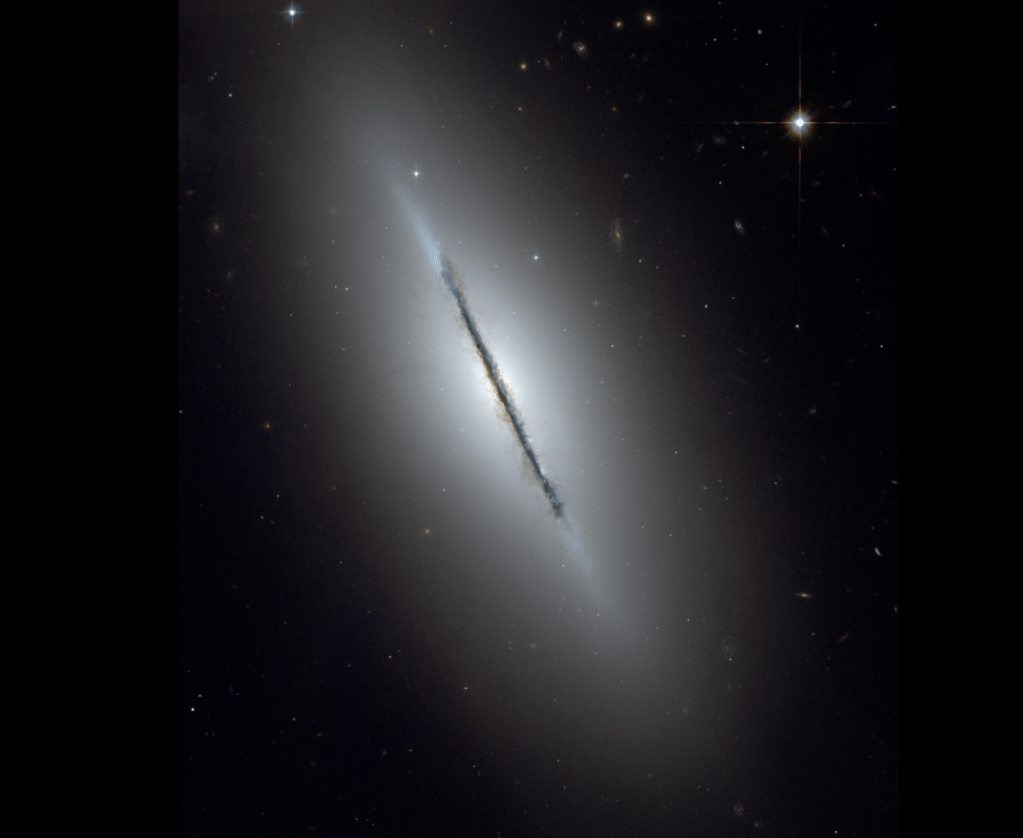
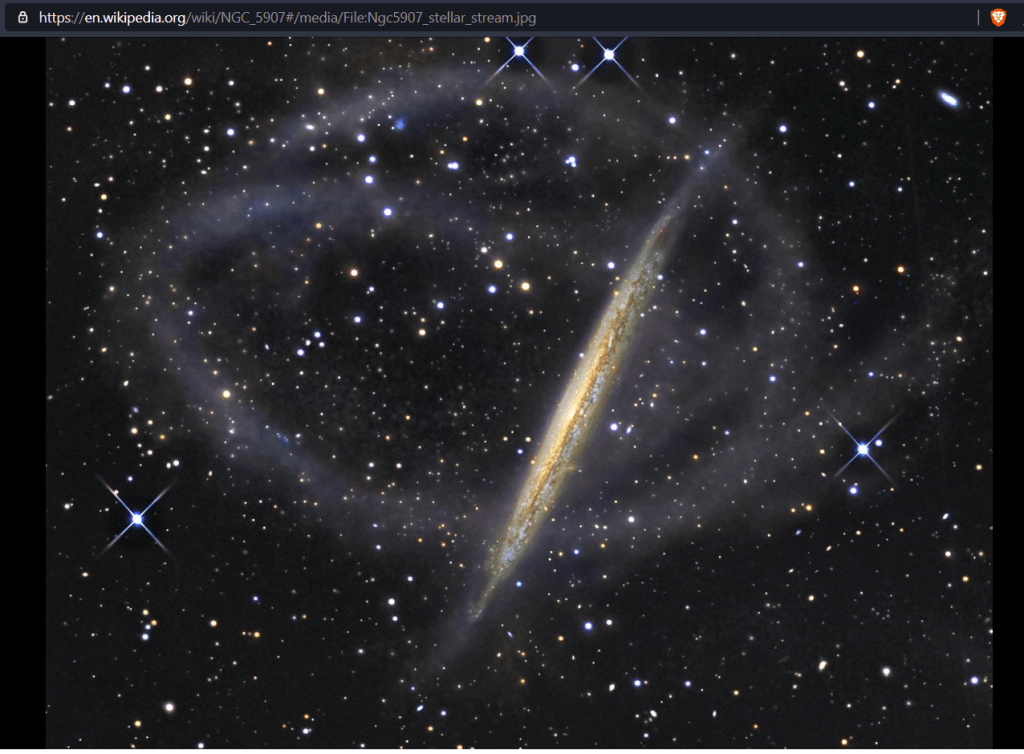
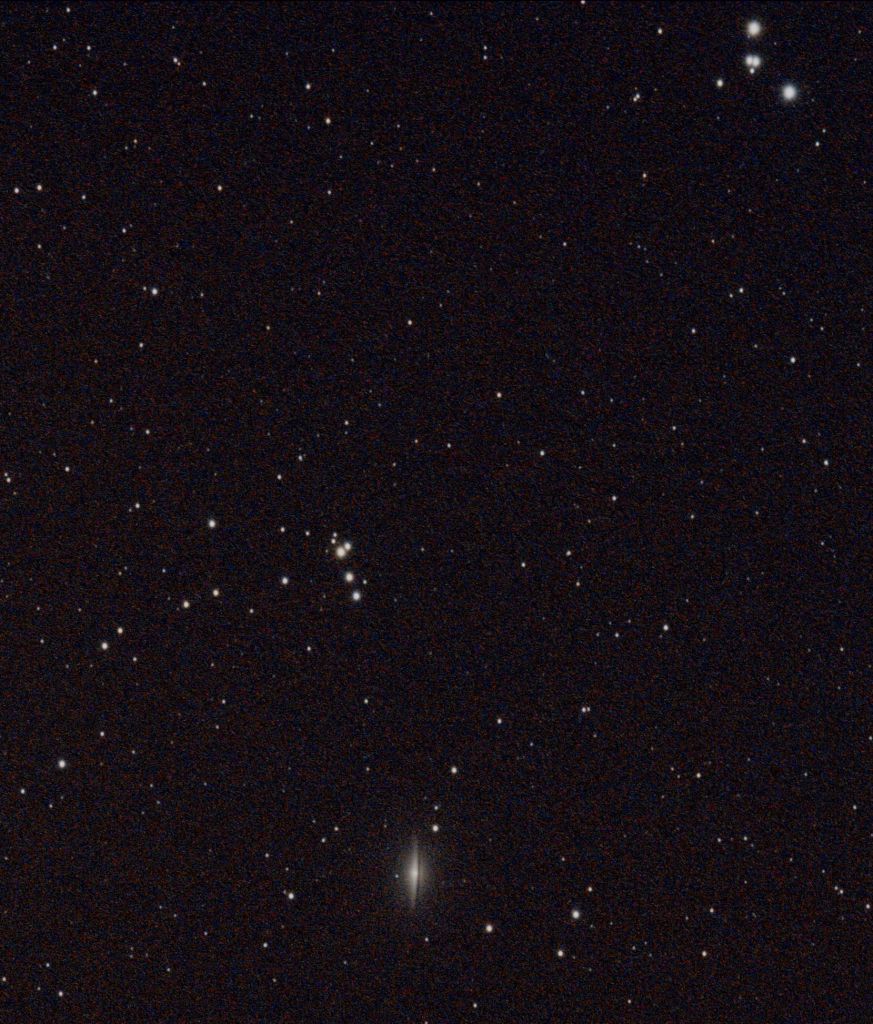
M102 is a small galaxy considered to be the same as NGC5866. It’s visually small even as galaxies go but it was in an easy part of the sky last night so i captured 30 subs of 60 seconds ISO 800 with the canon t3i and the william optics z61(360 f/6). The usual processing in Siril. The second picture below shows a broader crop where two other galaxies are obvious – NGC5879 on the lower left and NGC5905 on the right. M102 is about 50 million light years away. The third picture is a screencap of wikipedia’s image of M102 and the final one is wikipedia’s NGC5907 both of which blew me away.

M104 – Sombrero Galaxy

Thirty lights 60 seconds each at ISO 800 with the canon t3i through the William Optics Z61(360mm f/6). Processed in Siril with photometric colour calibration and asinh.

I took it for the Sombrero Galaxy but my eye is always caught by the patterns formed by stars in these images. Toward the top right is what feels like a cartoon of a rocketship fleeing the frame and near the middle left there’s kind of an arrow pointing to it. It’s all just perspective though – the sombrero galaxy is 30 million lightyears away and the individual stars are all in our own galaxy but nowhere near each other some are as “close” to us as a few hundred light years and some over 1,000.

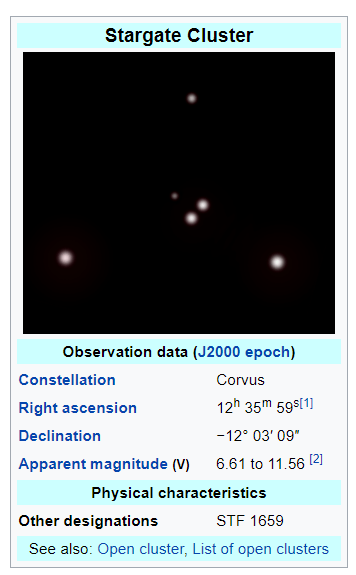
My rocketship though is apparently well known as the “Stargate” asterism STF 1659.

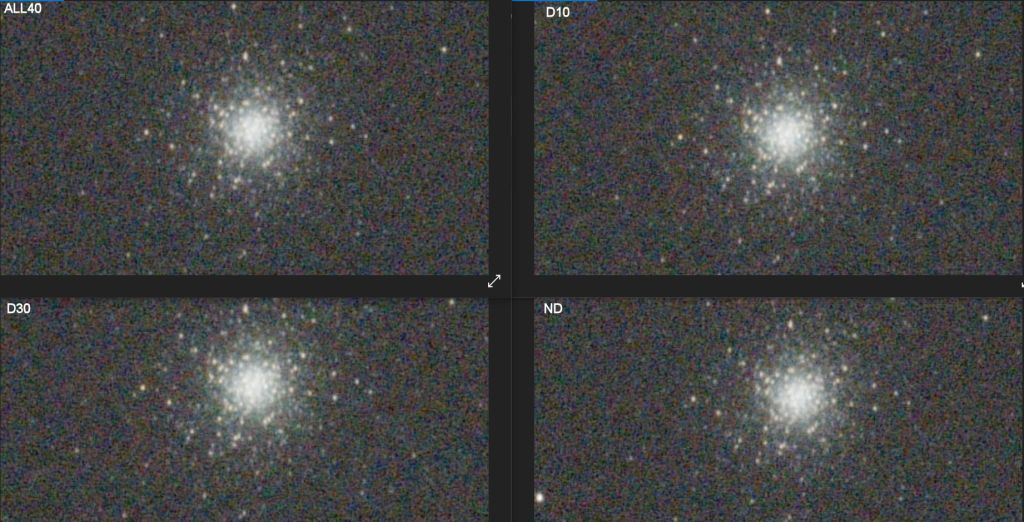
M3 – I’m Dithering!

Over-processed as always, this is 40 25 second shots at ISO 800 through the Z61(360mm f/6). Processed with siril’s photometric colour calibration then the black point raised .2. Of the 40 shots, 30 had dithering applied. That’s easy to do, just a button in Backyard EOS, but i can’t see that it made a difference.

Below is a comparo where i processed 10 images with no dither(ND), 10 with dither(D10), 30 with dither(D30) and the whole lot(ALL40).

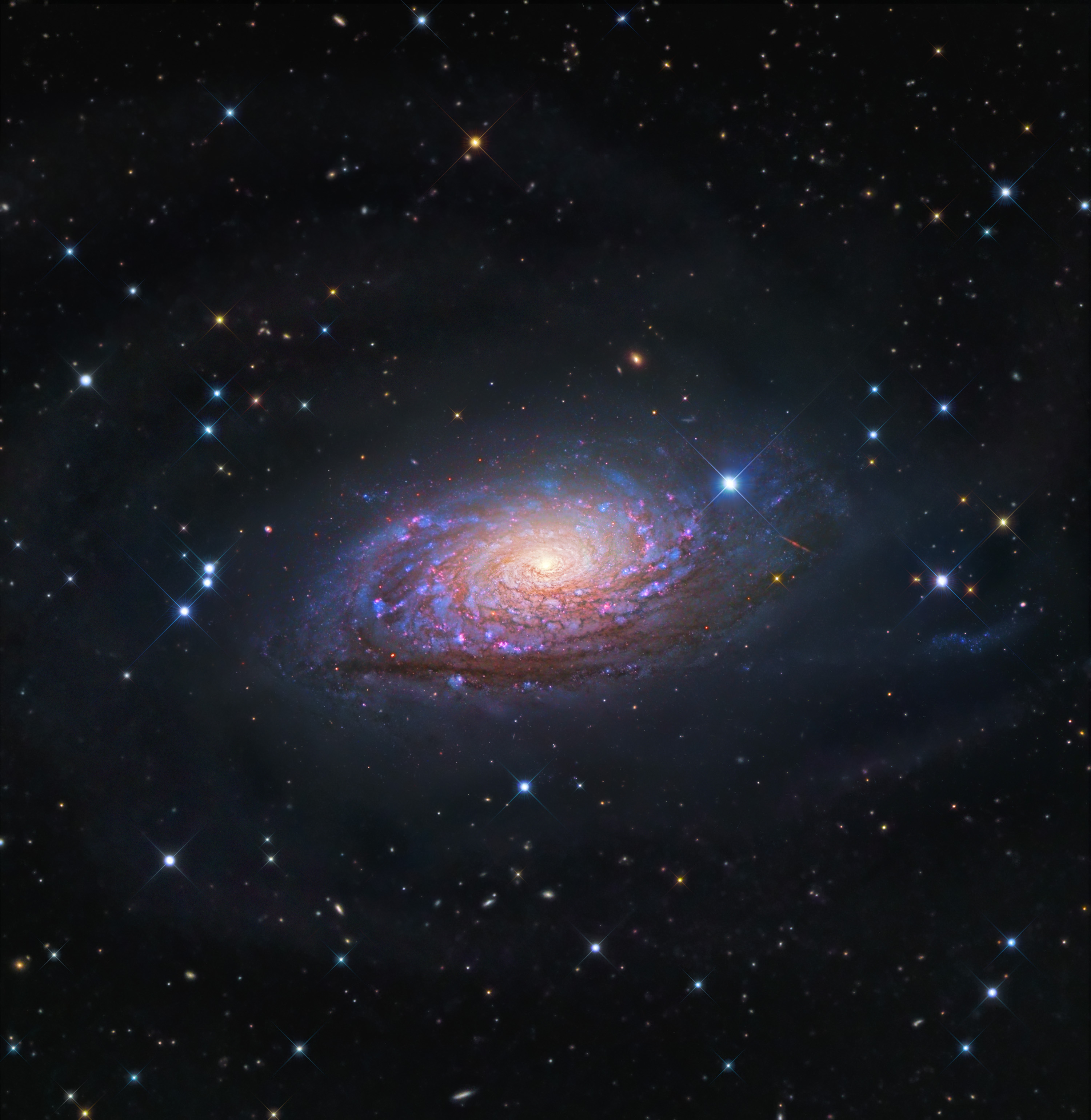
M63 – The Sunflower Galaxy

You just get a sense of the shape and colour of the Sunflower Galaxy in my cropped and over-processed image. It’s bright but you can see how small it is in the original below. I’m sure I could do better but it was quite a bright night with the moon near full and high in the sky.

This is 35 lights at 50 seconds ISO 800 through the Z61(f/6 360mm) with 5 darks, flats and biases from earlier work. Basically trouble free shoot limited only by conditions. Processed in Siril with per-image background removal. The blackpoint raised with ASINH and colour fully saturated. The speckles you see in the galaxy are really just noise that was all over the image but drowned out elsewhere by the processing.

The image below is from an Astronomy Picture of the Day and you can see the same star patterns around M63.

APOD: 2017 July 12 - Messier 63: The Sunflower Galaxy

Even Messier with a Triplet

This is what’s called the Leo Triplet: M65, M66, and NGC 3628. Unsurprisingly, they are in the Constellation Leo.

They’re not too far visually from Markarian’s chain and the background here is also full of less spectacular galaxies. Just to pick one at random, IC 2792 in the bottom right corner is magnitude 17 and apparent size is .5X.3 arcminutes as opposed to M66, closest to it in the image which is magnitude 10 and 9X4 arcminutes. So M66 might be visible in binoculars but IC 2792 is hopeless. NGC3596 in the top left, visible as a faint fuzzy in my image is mag 12 and about 4X4 arcminutes.

I took 42 images of 75 seconds at 800 ISO with the Canon t3i through the William Optics Z61(360mm f/6). Stacked and processed in Siril.

Much Much Messier

There is an area of the sky in the constellation Virgo known as the Realm of the Galaxies. In the image below you can see easily a dozen and there are many many more that you can’t quite pick out. There’s a central “J” or hook structure that’s called Markarian’s Chain. The chain contains M84 and M86 as well as half a dozen others. Also in the image are M87 and M88. I guess the simplest explanation is that we are looking out of the plane of our galaxy so we can see these other galaxies without interference. M84 is, for example something like 55 million light years from us while the core of the milky way is something like 50,000 light years away. I guess all of the individual stars that we can see are in a “tiny” corner of our own galaxy – tens to hundreds of light years away. Honestly, I had never heard of Markarian’s Chain before this week and i never realized how many galaxies we could see before i took this picture.

The image from below is from astrometry.net pointing out what’s in my image. I haven’t checked every one but i believe each entry represents a galaxy. NGC 4305 to pick one at random is 100 million light years away.

What I Can See From My Backyard

This is around 9:15 April 2 looking east from my patio. I have a clear view from about 20 degrees altitude at 72 degrees az(ENE). Anything above 30 degrees alt is clear to the east and below that from maybe 60 degrees to 85 degrees – so really more ENE than due E.

To the south above my roofline at azimuth 171(SSE) I have a clear view above about 35 degrees altitude but it starts to be blocked by my gazebo around AZ 215(SW).

I should have a good shot the Markarian chain of galaxies in virgo which show up to night at ALT 38, AZ around 111.